
The song · 5:23

Music cycle
To give voice to women who paid dearly for their courage and whom memory keeps half-forgotten — not as portraits of praise, but as stories with a price.
Albanian history and epic have been passed down mainly as the history of men. The names of women are there, but often in a single line: a queen, a sworn virgin, a girl who chose the sky over captivity.
This cycle puts them at the centre. Each song catches a single moment — the decision, or the price of it. Teuta, who does not bend before Rome. Nora of Kelmend, who refuses an empire. Tringa, the sworn virgin of Gruda. Argjiro and her last flight. Shotë Galica, who says «I am not a man — I am a woman».
The voice of all of them is S1M0NE, over cinematic and symphonic arrangement. The cycle keeps growing.
A note on the images: Tringa and Shotë have their own real photographs, because they lived in the age of the camera. Teuta, Nora and Argjiro have no historical portrait — what you see are depictions by S1M0NE, marked as such on each.
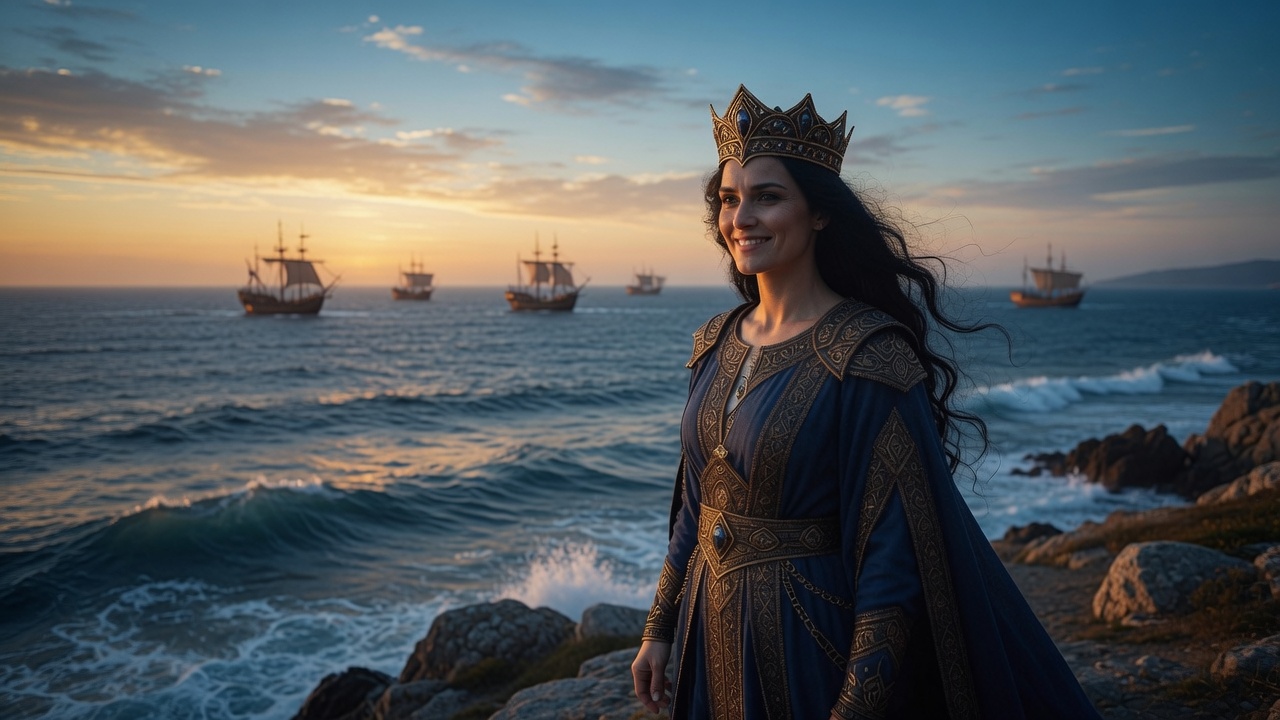
3rd century BC · history
Depiction by S1M0NE
Teuta was queen of the Ardiaei on the Illyrian shores of the Adriatic, ruling as regent after the death of her husband, King Agron, around 231 BC.
Illyrian ships controlled the sea and became a problem for Roman trade. When Rome sent envoys to demand redress, Teuta refused to restrain them — and one of the envoys was killed on his way home. The First Illyrian War followed, 229–228 BC.
She lost the war and accepted tribute and withdrawal from most of Illyria. But in memory she remained the woman who said no to Rome.
In this episode
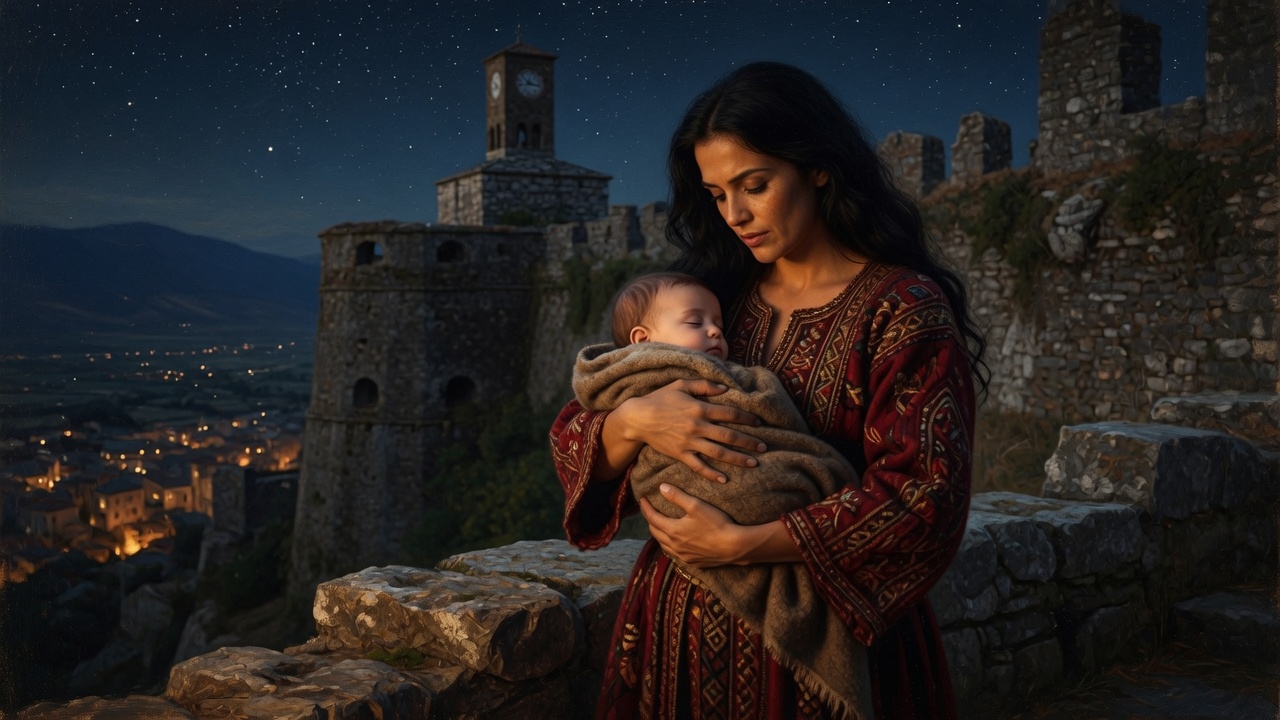
Legend
Depiction by S1M0NE
Argjiro is not chronicle but legend. The story says that when the castle was besieged and the fall inevitable, a mother with her infant in her arms chose the leap from the walls over captivity.
Her name became bound to Gjirokastra and was passed down from generation to generation until it entered literature.
The song does not try to prove the fact. It tries to catch the moment of the choice.
In this episode

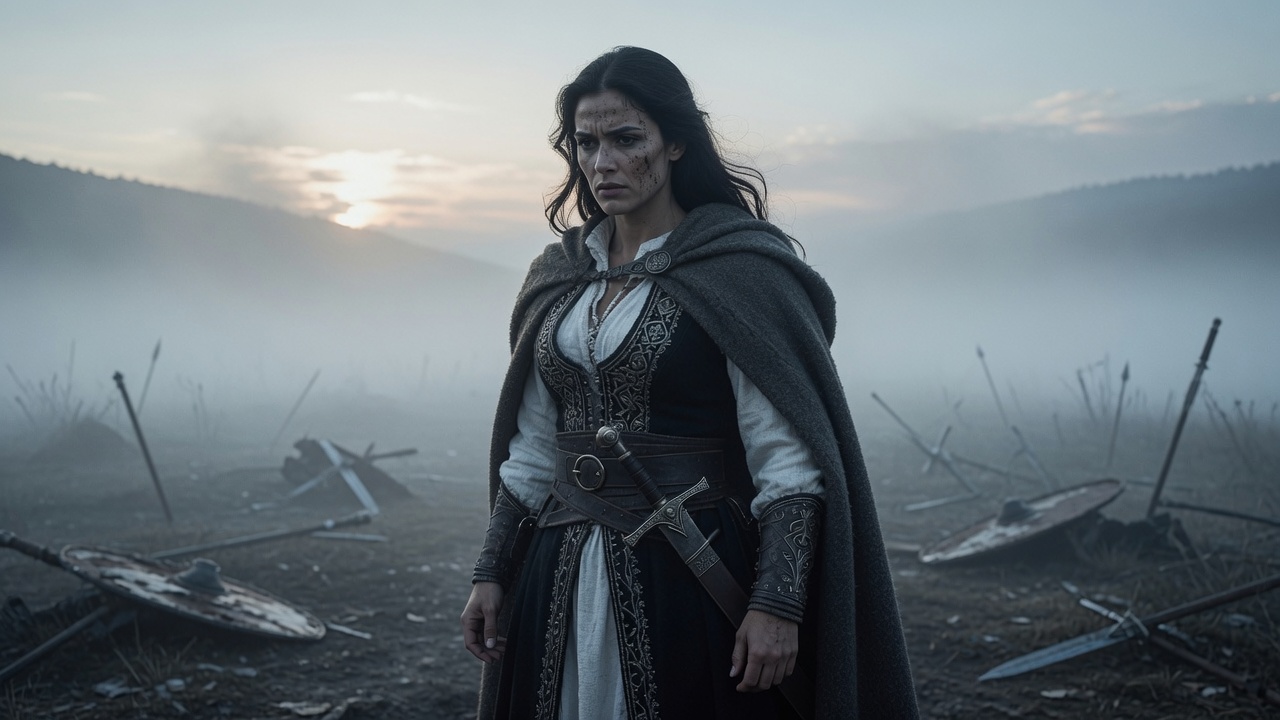
Legend of the Highlands
Depiction by S1M0NE
Nora of Kelmend comes from the tradition of the Albanian Highlands. According to the legend, the Ottoman commander who sought to take her by force was killed by her, and this set off the war with the highlanders.
There is no historical document to confirm it, and her figure stands between history and legend — precisely where oral tradition keeps its women.
In the song she is no symbol of beauty. She is the decision not to surrender.
In this episode

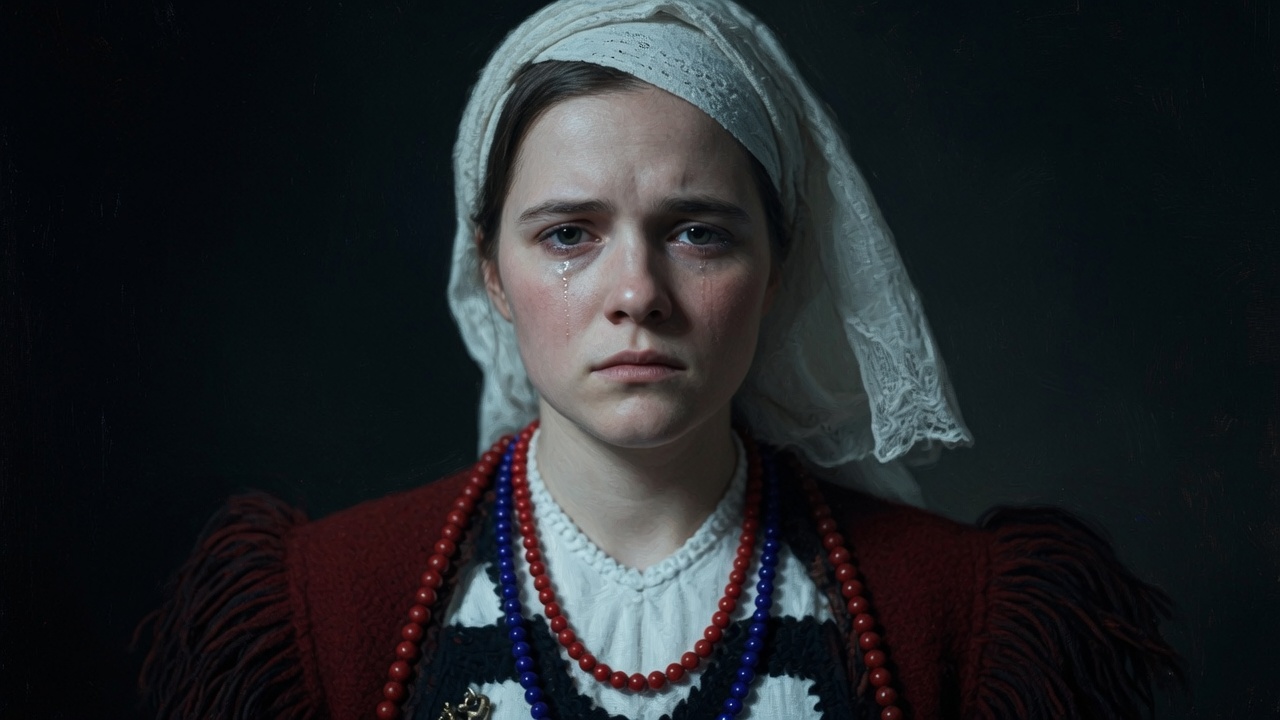
1880–1917 · history
Historical photograph
Tringë Smajl Martini (1880–1917) was the daughter of Smajl Martini, a leader of the Gruda tribe. After the death of her brothers she swore herself a burrneshë — a sworn virgin — and took up arms.
She distinguished herself at the Battle of Deçiq and took part in the Gërçe Memorandum of 23 June 1911. That same year, The New York Times called her the «Albanian Joan of Arc».
She died on 2 November 1917 and was buried in the mountains of Gruda.
In this episode

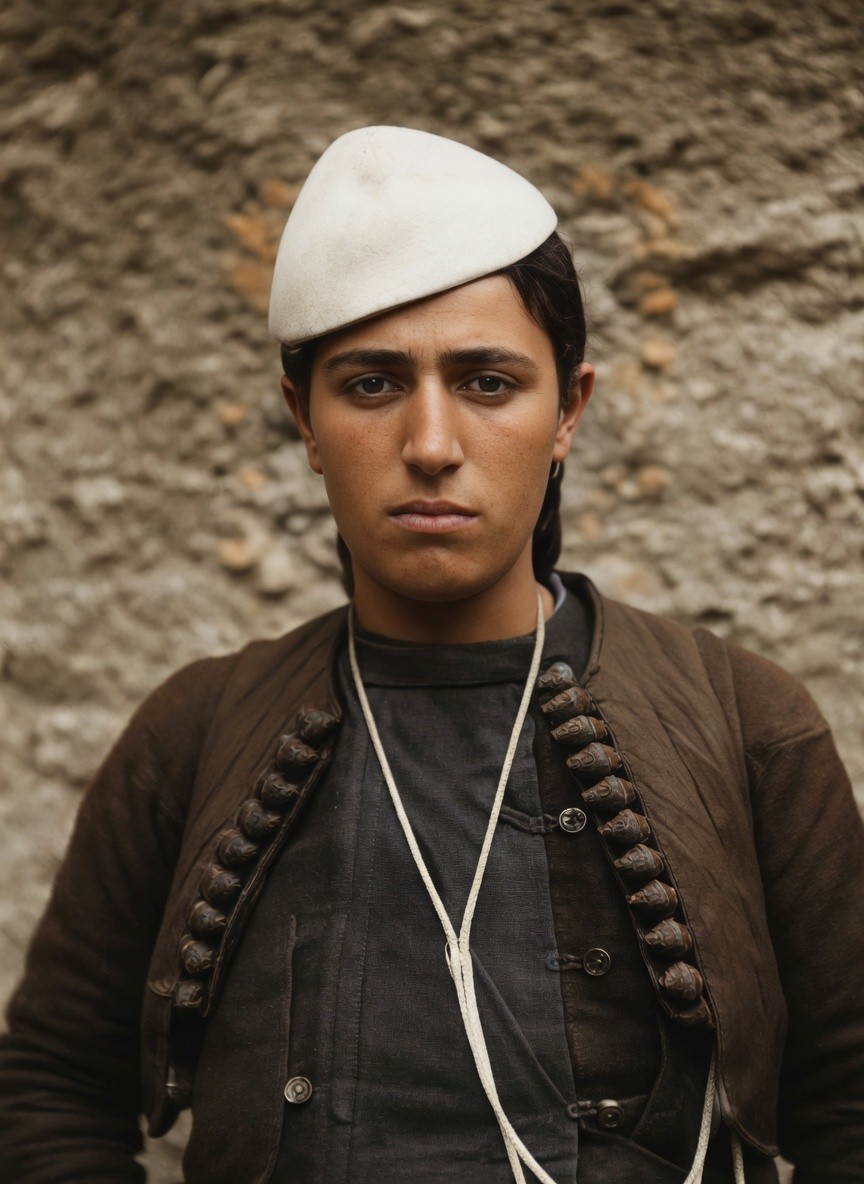
1895–1927 · history
Historical photograph
Qerime Halil Radisheva, known as Shotë Galica, was born on 10 November 1895 in Radishevë, in the Drenica region. She married Azem Galica in 1915 and joined him in the kaçak insurgency.
After Azem's death in 1925 she took command of his band herself and fought alongside Bajram Curri in Has of Prizren and in Luma. In 1926, in ill health, she crossed into Albania, where she cared for the orphaned children of her comrades.
She died on 1 July 1927 in Fushë-Krujë. «I am not a man — I am a woman» is the line the song puts in her mouth.
In this episode

The ancient source on Teuta and the First Illyrian War (229 BC).
Encyclopaedic entry on her rule as regent after Agron.
Context for the kaçak movement and the Highland uprisings.